Billy wallson
Senior DirectorPlayer prop markets are less efficient than game lines, and the gap widens in high-profile matchups where books prioritize volume over precision.
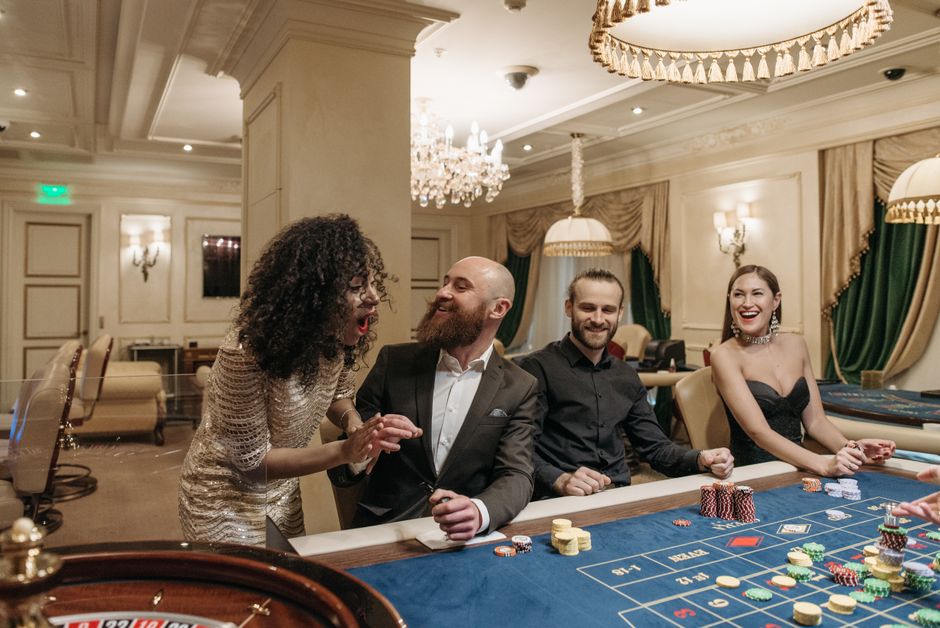
Casinos have been running the same psychological playbook since the days of Monte Carlo, but the digital era has turned that playbook into a laser-guided algorithm. Whether you're spinning slots at 2 a.m. on your phone, grinding micro-stakes poker, or sweating an accumulator on a Sunday afternoon, you're participating in the most sophisticated entertainment industry ever built. That's not a moral warning. It's a reality check, and it's the starting point for everything useful I'm about to tell you.
The iGaming world is projected to clear $100 billion in gross gaming revenue globally by 2027, and that scale attracts both brilliant product designers and bad actors. Knowing which is which, and understanding the math behind the games, is the difference between a hobby and a slow leak.
Slot machines are where most players start because they demand nothing from you. No strategy, no reads, no decisions. Tap, spin, hope. But that simplicity hides the fact that slots are the most mathematically opaque product in the casino.
Every modern slot is governed by an RTP (return to player) percentage. A 96% RTP slot means that, across millions of spins, the game returns 96 cents for every dollar wagered. The house keeps 4%. That sounds manageable until you realize that you're not playing millions of spins. You're playing a few hundred, and in the short run, volatility dominates everything.
Two slots can both have 96% RTP and feel completely different:
If a slot has a published RTP below 95%, you're playing a game that funds itself through player losses more aggressively than its neighbors. That's not a scam, but it is a choice you should make consciously rather than by default.
One more thing: bonus features are nearly always accounted for in the RTP figure. A game with a huge free spins round is not "due" to pay you. It is an independent trial every time you press the button. The gambler's fallacy is the most expensive belief in this industry.
If slots are entertainment, table games are where a thoughtful player can actually reduce the house edge to near zero.
Blackjack with perfect basic strategy cuts the house edge to roughly 0.5%, and card counting historically pushed it negative before the casinos adapted with multiple decks, shufflers, and 6:5 blackjack payouts. Most recreational players think they're playing strategy but are actually playing slightly educated guesswork, which puts them closer to a 2% edge against them than 0.5%.
Baccarat, paradoxically, is one of the fairest bets in the building if you just bet the banker — a house edge of about 1.06%, and the commission structure is the only reason it isn't zero. And yes, both baccarat and craps can be genuinely entertaining once you stop treating them as a way to beat the casino and start treating them as a way to have a good time without bleeding out.
The real advice for table players who want longevity:
Here's the most important distinction in the entire iGaming space: poker is not you versus the house. It's you versus other players, with the house taking a small fee called the rake. Before making a choice, it helps to review สล็อต.
That structural difference means poker is genuinely beatable. The rake is a headwind, not a guaranteed loss, and a skilled player can overcome it. But "beatable" is doing a lot of heavy lifting in that sentence.
Online poker in 2024 is brutally efficient. Solvers, HUDs (in some formats), trackers, endless database analysis — the recreational player who once funded the ecosystem has largely been squeezed out of the mid-stakes games. The pools that remain are tougher, which is why professional online poker has migrated toward formats where the edge is less about hiding your hand and more about exploiting population tendencies in weird variants like Spin & Go or short deck.
If you want to play poker seriously, the essentials are non-negotiable:
Recreational poker, played for fun with money you can afford to lose, is a fantastic hobby. Poker as an income plan is a job, and it's harder than most want to admit.
Sports betting is where knowledge of the actual sport matters least and knowledge of the market matters most. Lines are set by professionals using more data than you will ever have. Bookmaker margins typically run between 4% and 8% depending on the market, and that figure is the true house edge in betting.
The consequence is sobering. A bettor who wins 55% of -110 spread bets is genuinely profitable over the long run, but winning 55% at scale requires either very strong modeling or a very soft market. Sharp bettors look for line value (getting 53% when the line implies 50%), not for teams they "know" are good.
Practical tips for the recreational sports punter:
Where you play is the one decision you can't make on instinct. Regulated markets — the UK under the Gambling Commission, Sweden under Spelinspektionen, the various US state boards, the Malta Gaming Authority — impose rules on RTP disclosure, withdrawal times, and dispute resolution. Unregulated offshore sites offer no such protection, and the number of players who have discovered this after a $5,000 withdrawal was "delayed" for six months is depressingly large.
Check for a visible license number, verified payment processors, and published terms on bonuses. If a welcome offer comes with a wagering requirement of 40x the bonus and only slot contributions counting 20%, that promotion is worth close to nothing. Read the fine print before depositing, not after.
The truth about iGaming is that it's a brilliantly designed product built on a mathematically fixed edge. You are not going to grind the casino down the way a professional poker player grinds a table, and you shouldn't try. What you can do is play games with transparent math, understand your real edge or lack of it, use licensed operators, and treat the money you stake as the price of entertainment rather than an investment.
Set a hard budget, walk away when it's gone, and take the tax on the house edge as the cost of a night's fun. Do that, and you get to enjoy everything iGaming does well — the rush, the competition, the strategy — without becoming a statistic that feeds the other side of the equation.
Moneylines, spreads, and totals explained in plain English so you can actually understand what you're betting on.

Whether you won or lost matters less than whether you beat the number the market settled on, and that's a mindset shift worth making.
A quick look at three NFL games where the market's number doesn't match what the tape shows.

You can be a great handicapper and still go broke. Here's why bankroll discipline matters more than any single pick.

Player prop markets are less efficient than game lines, and the gap widens in high-profile matchups where books prioritize volume over precision.

Moneylines, spreads, and totals explained in plain English so you can actually understand what you're betting on.

Copyright © 2026 Pocket Pundit. All Rights Reserved.




Roseanne Williams
Sep 17, 2026 ReplyUnderdog betting isn't about blind hope — it's about finding spots where the market undervalues a team's real chances.